I recently penned a column that took a surface look at the history of the disability movement in the United States. As many readers pointed out, my list of world changers and their accomplishments was far from exhaustive. I’d like to share another small part of the movement that…
Muscle Memoirs:LGMD Experiences — Patrick Moeschen

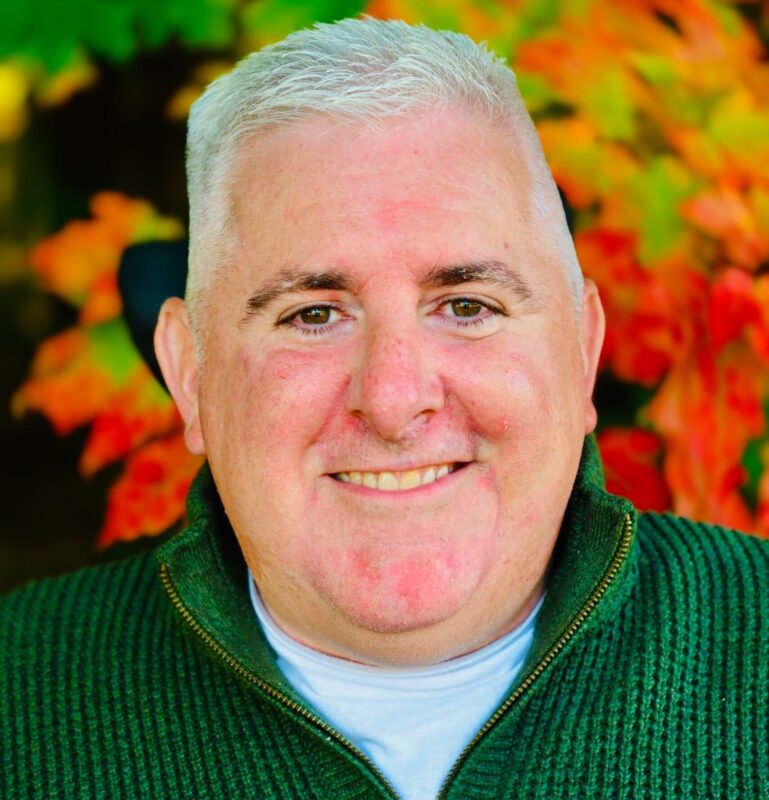
A human being since 1972, Patrick Moeschen recently retired after 28 years of teaching music at the middle school level in a public school setting. Diagnosed with Becker muscular dystrophy (MD) in 1985, and re-diagnosed with limb-girdle 2E MD in 2012, Patrick leads an active life working with nonprofits and advocating for individuals living with MD. Patrick lives with his wife Vanessa, and two sons, Timothy and Teddy in a handicap accessible home that they designed in Salem, New Hampshire.
Everyone recognizes the blue and white signs featuring a figure in a wheelchair that adorn certain parking spots. I call him the wheelchair guy, and he allows me to park close to public building entrances. The sign is an international symbol of disability. Of course, many disabled people are able…

This August will mark 40 years since I was diagnosed with what we eventually discovered was limb-girdle muscular dystrophy. Though it’s taken me many years to accept my condition, it’s progressed slowly over the past four decades — and in that way, it’s somewhat akin to the…
Each of my writings in this column has focused on living life with limb-girdle muscular dystrophy. While the mission of Bionews, the parent company of this website, includes sharing what it’s like to live with a chronic progressive condition, I believe it’s also paramount to share other aspects of…
A close friend of 30 years recently asked what my life was like before I was diagnosed with limb-girdle muscular dystrophy. When I met this man, we were both in college, studying music and playing drums. It was 1991, and I’d been diagnosed with muscular dystrophy for only…
“ICE” is a widely used acronym for “in case of emergency.” In today’s fast-paced world, many people have ICE contacts on their phones and folders on their computers that tell others who to call in the event of an emergency. Those of us living with chronic illness can and…
I’ve been married for 11 years. Before then, as I grew up with what I eventually discovered was limb-girdle muscular dystrophy, I learned a lot about life, perseverance, and relationships. During my 20s, I had long relationships with a couple of women with whom I thought I’d possibly spend…
In August 1985, I was diagnosed with Becker muscular dystrophy. At that time, there was no genetic test for the disease, nor DNA sequencing of the blood. Instead, I underwent a muscle biopsy on my left thigh and calf, the tissue was sent for pathology, and the medical…
Since I began writing for Bionews, the parent company of Muscular Dystrophy News Today, I’ve connected with many people living with chronic illness outside of my “comfort community” — those with forms of muscular dystrophy (MD). While I live with limb-girdle MD, I have many friends…
The power to influence or even direct people’s behavior or the course of events is part of a typical definition of “control.” When living with a chronic illness, as I am with limb-girdle muscular dystrophy, our desire to control the course of events can be a creative balancing act.
People living with a chronic illness, including me, commonly explore how we deal with grief, which is the subject of much theory and research. I’ve thought deeply about how living with limb-girdle muscular dystrophy (LGMD) can be seen through the familiar Kübler-Ross model of the grief cycle, with its…
Like me, my colleagues here at Bionews, the parent company of this website, write about their lives with chronic illness. In our columns, “we make a promise to our rare disease communities to deliver trustworthy information to help educate, engage, and champion the patient voice.” These words appear on the…
In my four decades of life with limb-girdle muscular dystrophy, I’ve become comfortable educating everyone I meet about my quality of life and the ways all of us living with chronic, rare conditions have been given a wonderful chance to influence societal views of the disabled community. I’ve…
Recent Posts
- To me, a wheelchair is a symbol of improved function, not disability
- How to combat social isolation while growing older with muscular dystrophy
- When it comes to rare disease advocacy, just keep showing up
- ‘The Wonder Years’ were the ‘worry years’ before my MD diagnosis
- An essay on choosing hope in life with a progressive, degenerative disease