Ahead of this year’s MDA Conference, association’s CEO speaks of ‘hope’
Annual meeting puts doctors, researchers, drug developers in the same room
Written by |

Next week, researchers, clinicians, industry leaders, and families will gather at the 2026 MDA Clinical & Scientific Conference, hosted by the Muscular Dystrophy Association (MDA), to discuss the latest advances in neuromuscular disease research and care.
Ahead of the event, Bionews, the parent company of this site, sat down with Sharon Hesterlee, PhD, the MDA’s president and CEO, to discuss what she’s looking forward to at the annual conference — and to learn more about the latest developments in MDA’s research, patient support programs, and advocacy initiatives.
The CEO, who previously worked as MDA’s chief research officer, says what she enjoys most about the yearly event is “the groups of people that it brings together.”
Doctors who treat people with neuromuscular diseases are in the same room as laboratory researchers and representatives from companies developing new treatments.
“Having those unique mixes of people in the room really creates interesting conversations,” Hesterlee said.

Hesterlee, a neuroscientist by training, has been involved in the neuromuscular disease space for about 25 years, in both nonprofit and for-profit sectors. Beyond MDA, she’s worked for large companies such as Pfizer and smaller biotech firms.
Key MDA Conference session: Muscle regeneration
Her favorite part about working with MDA? “You get to see so many different projects underway … it’s sort of like the 30,000-foot view of things that are happening,” Hesterlee said. “It really gives you a lot of hope, you know, for the future, because you see so many things in progress instead of just like one little piece of one project.”
The upcoming conference offers an annual snapshot of that progress. It will involve sessions related to a range of neuromuscular diseases, including muscular dystrophy, spinal muscular atrophy, amyotrophic lateral sclerosis (ALS), and myasthenia gravis.
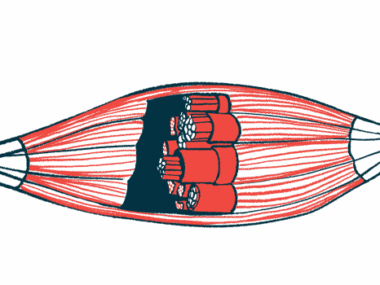
Among the meeting topics that Hesterlee says she’s most excited about is a session on muscle regeneration and repair. While many available treatments for neuromuscular diseases are designed to help slow declines in muscle strength and function, they can’t reverse damage that’s already been done.
“The next step where we really need to be is figuring out how to regenerate muscle, because muscle does regenerate, it just doesn’t do it very well in this disease context,” Hesterlee said.
Scientists are working to better understand muscle repair processes in health and disease. They’re using that information to develop treatments that could complement muscle-stabilizing approaches such as gene therapy.
“I think what would be great is to be able to take someone who’s lost a reasonable amount of muscle mass and be able to boost regeneration so they can rebuild that, followed by a treatment … to stabilize that muscle,” Hesterlee said.
With that approach, she noted, a person’s function might improve, rather than just stopping it from getting worse. “We really want to find a way for people to regain function,” Hesterlee said.
Other sessions and topics Hesterlee is looking forward to include those focused on safely and effectively implementing gene therapy technology in clinical care centers, as well as “some exciting breakthroughs” toward reaching an earlier ALS diagnosis.

Progress needed on treatments for all MD types
Looking ahead, Hesterlee is excited to see ongoing progress in the treatment of certain forms of muscular dystrophy, such as myotonic dystrophy and facioscapulohumeral muscular dystrophy, which are “both big patient populations that haven’t had … any new drugs approved.”
She’s also excited about new research into more effective and safer ways to deliver treatments directly to muscle tissue. Although that research is still in early stages, “we’re seeing that technology is really exploding,” Hesterlee said.
Beyond research, MDA offers a wide range of services for families affected by neuromuscular diseases, the CEO noted.
This year, that will span four patient-focused symposia. While patients and families do participate in the upcoming Clinical & Scientific conference, the event is geared more toward researchers and clinicians.
The Engage Symposia are designed to be particularly accessible to families. “They’re getting the latest information,” Hesterlee explained. “They’re getting it straight from the scientists, but, you know, geared a little more toward a general audience.”
Another newly launched MDA program that Hesterlee is excited about offers grants to defray the cost of medical equipment such as wheelchairs and lifts, which is a “huge need in our population.”
A longstanding favorite among community members that will continue this year is MDA’s annual summer camps. The camp gives children with neuromuscular diseases a chance to foster independence in a safe environment that supports their medical needs, while also giving parents and full-time caregivers “a bit of a break,” Hesterlee noted. She added that the program has been ongoing for more than 75 years.
[At MDA,] it starts with the families, who are the ones who … unfailingly push for research.
All of these research and patient programs supported by MDA are part of the organization’s larger effort to improve the lives of people living with neuromuscular diseases. According to the CEO, collaboration between families, researchers, industry leaders, and nonprofits is crucial to realizing this mission, but families are the “fuel that pushes everything down the road.”
“It starts with the families, who are the ones who … unfailingly push for research,” Hesterlee said. “They want to help support it. They help fund it. They’re enthusiastic about it.”
She noted that when families are involved in the drug development process, it makes it far more likely that effective medications will be developed, “ because you’re getting that feedback all the way through the program on what’s really important to them.”

MDA is keeping up the fight for government funding
Families are also central to MDA’s advocacy efforts to secure more funding for neuromuscular disease research and support. While MDA and other organizations provide substantial funding, Hesterlee noted that “the lion’s share still comes from the federal government.”
In a bipartisan effort, the U.S. Congress recently passed a federal funding bill that upheld key investments in research and healthcare. Further, a rare pediatric review voucher, which incentivizes companies to develop treatments for children with rare diseases, was reauthorized.
According to Hesterlee, for some ultra-rare diseases, this voucher is “about the only incentive that motivates a company to work in that space,” so having that program renewed was a “big win.”
MDA credits these funding milestones to families and others involved with MDA who are persistent advocates for their community.
Hesterlee’s advice for families who want to get involved: “Start on our website.”
The website has a dedicated advocacy section that breaks down important topics and provides templates for contacting elected representatives. There’s also a mailing list to stay apprised of the latest updates.
Despite many research and advocacy wins this past year, the neuromuscular disease community faces challenges ahead.
There have been funding challenges for academic research institutions and drug development companies that could make it harder for research to progress. Personnel changes at the U.S. Food and Drug Administration and other organizations have also posed challenges for drug development.
Still, Hesterlee sees reason for hope. “I think they’re starting to find their way, get their footing,” the CEO said. “So we’re hoping again that that’s not going to be the case in 2026.”