Muscle stem cells and muscular dystrophy
 Fact-checked by
 Muscular dystrophy (MD) is a group of genetic disorders characterized by progressive muscle weakness and wasting. Muscle stem cells, which play a vital role in the body’s natural muscle repair processes, also often become dysfunctional.
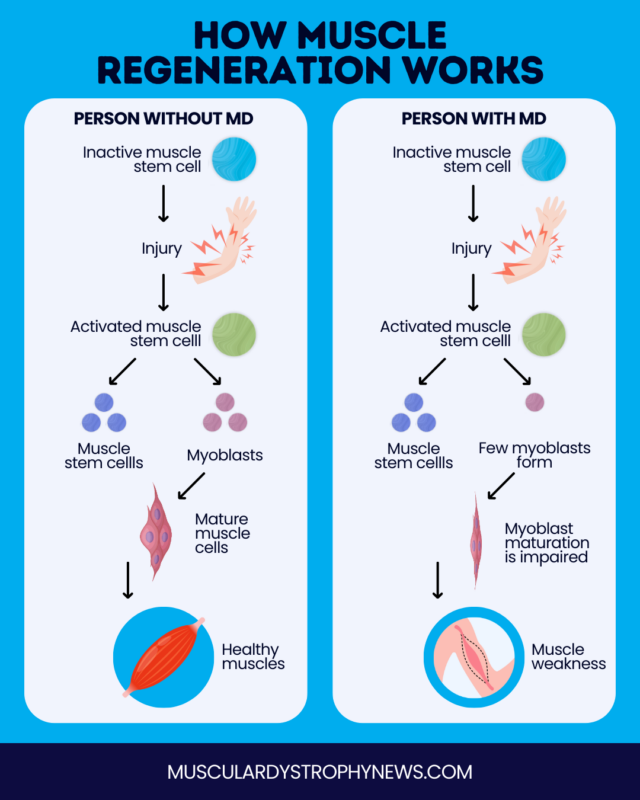
Normally, when muscles are damaged, muscle stem cells — also called satellite cells — mature into muscle cells to help repair the affected tissue. In people with MD, this repair process is less efficient, and muscle regeneration is disrupted.
Several experimental MD treatments are designed to improve muscle stem cell function and boost muscle repair. This type of stem cell therapy isn’t yet available, but approved MD treatments can help maintain muscle health.
Understanding muscle stem cells
Muscle stem cells are among the few cell types in the body that can mature, or differentiate, into working muscle cells. They are needed for the maintenance, repair, and regeneration of healthy muscles throughout life.
When new muscle cells are needed, the stem cells divide to give rise to muscle cell precursors called myoblasts, which then grow into mature muscle cells. Muscle stem cells are also self-renewing, meaning they can continuously generate new stem cells, ensuring the body always has a supply.
The most common types of MD, Duchenne muscular dystrophy and Becker muscular dystrophy, are caused by genetic mutations that result in a lack of functional dystrophin protein, leading to fragile muscles that are repeatedly damaged. Muscle stem cell function may also be affected in various ways, including:
- the stem cells become overworked while attempting to repair chronic muscle damage
- a lack of dystrophin can disrupt normal stem cell division, impairing the formation of myoblasts
- ongoing muscle inflammation makes the stem cells age more quickly and shortens their lifespan
Ultimately, abnormal and overworked muscle stem cells are not as effective at repairing and regenerating muscles, which can contribute to the muscle weakness and mobility problems seen in MD. Some of these processes are also at play in other, less common types of MD.
How muscles repair themselves
Most of the time, muscle stem cells remain inactive within muscle tissue. After strenuous exercise or when there’s damage to muscle fibers, the bundles of cells that form muscles, the stem cells receive cellular signals that cause them to activate. In healthy individuals, this triggers the following muscle fiber repair process:
- Muscle stem cells divide to create myoblasts and more muscle stem cells
- Myoblasts mature into muscle cells, or myocytes
- Myocytes fuse with damaged muscle fibers to repair them, or with each other to create new muscle fibers
- The repaired or new fibers become part of functional muscles
In addition to repairing damage, this process also helps build muscle strength over time through physical activity.
MD-related changes in muscle stem cells can disrupt each step of the process:
- Muscle stem cells don’t create enough myoblasts
- Myoblast maturation into muscle cells is impaired
- Myocytes fuse into fibers that have structural problems
- New muscle fiber function is impaired
Current research on muscle stem cells in MD
Several experimental therapies for MD aim to promote the health of muscle stem cells, thereby boosting the body’s ability to repair damaged muscles. These emerging therapies use stem cells or their derivatives to promote natural regeneration processes.
Animal studies have found that implanting muscle stem cells, myoblasts, or related cell types can help promote muscle regeneration. While most approved MD therapies are designed to slow or stop disease progression, this approach could, in theory, also help reverse existing damage.
However, translating the approach to humans is challenging. Researchers are still experimenting with the best ways to:
- deliver or implant stem cells for maximal effect
- avoid an immune reaction against the implanted cells that could cause cell death and other complications
- efficiently manufacture therapies
Early-stage clinical trials are underway to test some of these stem cell therapies in people with MD, but it is too soon to say if or when they might be approved.
Other research is exploring whether existing classes of MD medications have beneficial effects on muscle stem cells. Laboratory studies have shown:
- gene therapy for MD, which aims to correct the underlying genetic causes of the disease, may also be able to boost muscle stem cell health
- corticosteroids, a class of powerful anti-inflammatory medications at the cornerstone of MD treatment, may help restore normal muscle stem cell behavior
However, the full effects of these classes of therapies on muscle stem cells remain unclear.
What this means for people with MD
While stem cell therapies aren’t yet widely available for MD, approved treatments can support MD muscle health. People living with MD should work with their care team to help address progressive muscle weakness and other symptoms. In addition to medication, this may include:
- tailored daily exercise and physical therapy
- occupational therapy
- using mobility aids
Patients who have been diagnosed with MD can also ask their physicians about their eligibility for muscle stem cell therapy clinical trials, some of which are ongoing.
Muscular Dystrophy News is strictly a news and information website about the disease. It does not provide medical advice, diagnosis, or treatment. This content is not intended to be a substitute for professional medical advice, diagnosis, or treatment. Always seek the advice of your physician or other qualified health provider with any questions you may have regarding a medical condition. Never disregard professional medical advice or delay in seeking it because of something you have read on this website.