
Exoskeleton-supported Training Improved Movement in Limb-Girdle Patients, Small Study Found
Written by |
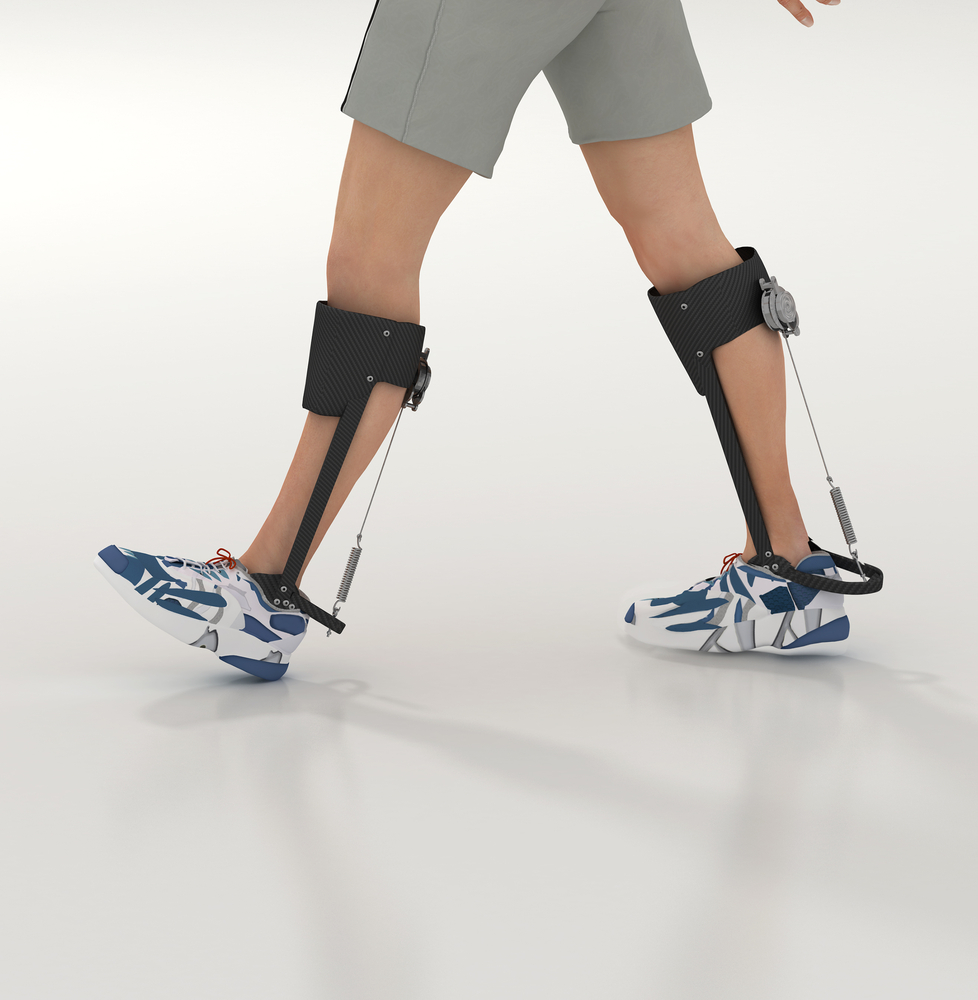
Treadmill training using a voluntary-driven exoskeleton might be a safe approach to improve movement and exercise capacity in patients with limb-girdle muscular dystrophy, according to a small study by researchers at Ruhr University Bochum in Germany.
The study, “Treadmill Training with HAL Exoskeleton — A Novel Approach for Symptomatic Therapy in Patients with Limb-Girdle Muscular Dystrophy — Preliminary Study,” showed that three studied patients improved on several tests assessing movement and reported better endurance after an eight-week course of three weekly sessions.
The method, which research shows is effective in patients who had a stroke or spinal cord injury, should be explored in larger groups of patients, including those with other types of muscle diseases, researchers noted.
Researchers made use of an exoskeleton called HAL (hybrid assistive limb) in their study, which was published in the journal Frontiers in Neuroscience.
The three patients were still able to walk and had similar levels of impairment. The team measured a range of parameters before the training began, and again after eight weeks.
All three patients improved their performance on the treadmill over the eight weeks of training.
More importantly, however, measurements showed that after completing the training program, they walked a 10-meter distance faster, and improved their performance on the 6-minute walk test, which measures the distance walked in six minutes.
They also improved on the timed-up-and-go test, in which patients are required to stand up from their wheelchair, walk three meters, turn around, walk back and sit down.
Only two patients completed an additional follow-up six weeks after the training had stopped. This showed that improvements in the 10-meter distance and timed-up-and-go tests were still noticeable, while the 6-minute walk test improvement was not. This suggests that continuing the exercise might be beneficial.
All three patients said their endurance had improved after eight weeks of training.
The team also measured balance and functional independence in the three patients. These measures varied more between the patients.
Two of the patients also said they had no adverse effects from the training, while the third felt a general weakness but no muscle pain or stiffness. The weakness lasted for about one or two hours after a training session.
The data prompted researchers to move forward with larger studies using the HAL exoskeleton.

carmen osuna
Good evening! Is there any way to get in touch with this University? I have a diagnose of Limb Gridle. I apreciate your feedback.
Thanks in advanced.
Magdalena Kegel
Hi Carmen,
If you click on the link to the article, you can find the author information right under the author list. The University is located in Germany. I wish you luck with accessing the training.
babita
[email protected] I'm a muscular dystrophy patient
Ram Chandra Paudel
Dear Sir
I am MD patient with Limb GGridle, aged 48 yrs. I can hardly walk for 30 minutes. I can stand up hardly with hand catching place of tools or rough wall.
Magdalena Kegel
Dear Ram,
We at Muscular Dystrophy News are only reporting on the research. If you wish to contact the researchers, you can find the author information if you follow the link to the original article. It is right below the author list. The University is located in Germany. I wish you luck with accessing the training.
Gideon Dazi
I am really understand. I just turned to 49 years old, and I to have a limb girdle muscular dystrophy, and I know that is a challenge. Take care of yourself bye bye.
Gideon Dazi
Thank you so much for the research hope to get some treatments.
Samuel Pegram
Patients of limb-girdle muscular dystrophy can improve their immoveable state by doing exercise and treadmill training. I think this is the spectacular and enticing act for those persons who are paralyzed. It is also affordable, adoptable, and inexpensive for sufferers.
Louis
Hello..
Is this training available in Uniklinik Münster too? Because there where i always go.