I help people through a neuromuscular diagnosis and whatever comes next
With the MDA Resource Center, no one faces this experience alone
Written by |
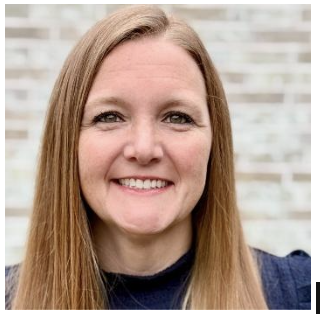
Brooke Smith is senior director of the MDA Resource Center, which supports families across more than 300 neuromuscular diseases. (Courtesy of MDA)
“I don’t even know what question to ask.”
I’ve heard some version of that sentence hundreds of times.
Sometimes it’s from a parent whose child was just diagnosed with Duchenne muscular dystrophy. Sometimes it’s a husband whose wife has been diagnosed with ALS. Other times it’s someone living with spinal muscular atrophy, Charcot-Marie-Tooth disease, limb-girdle muscular dystrophy, or another one of the more than 300 neuromuscular diseases the Muscular Dystrophy Association (MDA) supports.
The diagnosis may be different, but the emotions are often the same: fear, uncertainty, grief, and a feeling that life has suddenly changed forever.
As senior director of the MDA Resource Center, those conversations have shaped how I think about my work. People don’t call us because they need another brochure or website. They call because they’re looking for someone who can help them make sense of what comes next.
A diagnosis doesn’t just affect one person. It changes life for an entire family.
Almost overnight, people find themselves learning new medical terms, searching for specialists, navigating insurance, researching treatments, and trying to balance everyday responsibilities while processing an overwhelming amount of information. It can feel impossible to know where to begin.
That’s why one of the first things we do is simply listen.
Every family’s situation is different. A young couple planning for the future has different questions than parents of a newly diagnosed child or an adult experiencing symptoms for the first time. Before we offer resources, we want to understand what matters most to them.
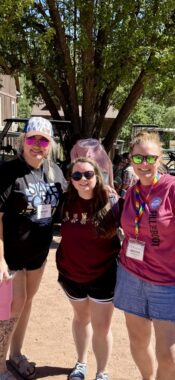
Brooke Smith with MDA staffers Nicole Marshall and Sara Melton at the MDA Summer Camp at Arizona’s Whispering Hope Ranch, where a full team works together to support kids and families. (Courtesy of MDA)
Often, that means helping connect them with one of MDA’s multidisciplinary Care Centers, where specialists work together to coordinate comprehensive care. For many families, finding the right clinical team is the first step toward replacing uncertainty with a plan.
People are increasingly asking questions about emerging therapies. Gene therapies and other scientific advances are creating new possibilities across several neuromuscular diseases, but they can also bring complicated decisions and unfamiliar terminology. Through MDA’s Gene Therapy Support Network, we’re able to help people and families understand the treatment landscape, prepare questions for their healthcare providers, and access trusted educational resources that empower informed decision-making.
Hope also comes from knowing that research continues to move forward. Families frequently ask about clinical trials, new therapies, and scientific breakthroughs. While we don’t provide medical advice, we can help people understand the available resources and connect them with information to support conversations with their care teams.
Some of the most meaningful conversations, however, have nothing to do with medicine.
They happen when we connect someone with another person who truly understands.
A parent speaking with another parent. A caregiver finding someone who’s walked a similar path. An adult living with the same diagnosis sharing what they’ve learned along the way.
Those connections remind people of something that’s easy to forget after a diagnosis: you are not the only one navigating this journey.
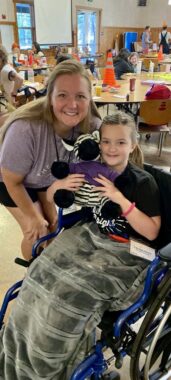
Brooke Smith with MDA Summer Camp camper Charlotte Madole at Grizzly Creek Ranch in Portola, California, in 2024. (Courtesy of MDA)
One of the first invitations I like to extend is to Join MDA. Membership opens the door to a community of people who understand this journey and provides access to trusted resources, educational programs, and opportunities to stay connected as needs evolve. For those seeking more personalized guidance, individuals and family members can also schedule a free one-on-one MDA Connect virtual appointment with one of our specialists. Sometimes having dedicated time to ask questions, talk through concerns, or simply know someone is there to listen can make all the difference.
No one should have to navigate a neuromuscular disease alone. That’s why I also encourage people to participate in MDA’s Community Support Groups, where people living with neuromuscular diseases, caregivers, and family members can connect with others who truly understand the challenges — and the victories — that come with these conditions. Time and again, I’ve seen how those relationships become an incredible source of encouragement, practical advice, and hope.
We also help families discover opportunities that can make life brighter. For many children and young adults ages 8-17, MDA Summer Camp becomes a place where they build confidence, independence, lifelong friendships, and memories that extend far beyond a single week. For others, support may mean finding financial assistance, durable medical equipment resources, caregiver resources, or educational programs that make daily life more manageable.
No two conversations are ever exactly alike, but every one reinforces the same lesson.
People rarely expect us to solve everything during a single phone call. What they’re really hoping for is someone who will stay with them as they take the next step. That is what inspires me most about the work we do. Every day, I have the privilege of meeting people at one of the most vulnerable moments of their lives and helping them discover they don’t have to face it alone.
I still think about that first sentence I hear so often: “I don’t even know what question to ask.”
My answer is always the same. “You don’t have to have all the questions. We’ll figure them out together.”
Still have questions? Continue the conversation with Brooke and MDA during our live AMA Forum event on Sept. 15, 1–2 p.m. ET. Register today.
This article was provided by our partner, the Muscular Dystrophy Association. It has been reviewed by Bionews for accuracy and relevance. The views and opinions expressed are those of the author and do not necessarily reflect the views of Bionews or Muscular Dystrophy News Today.