
MDA Engage: California event highlights community connection
Different perspectives inform goals for doctors, researchers, advocates
Written by |
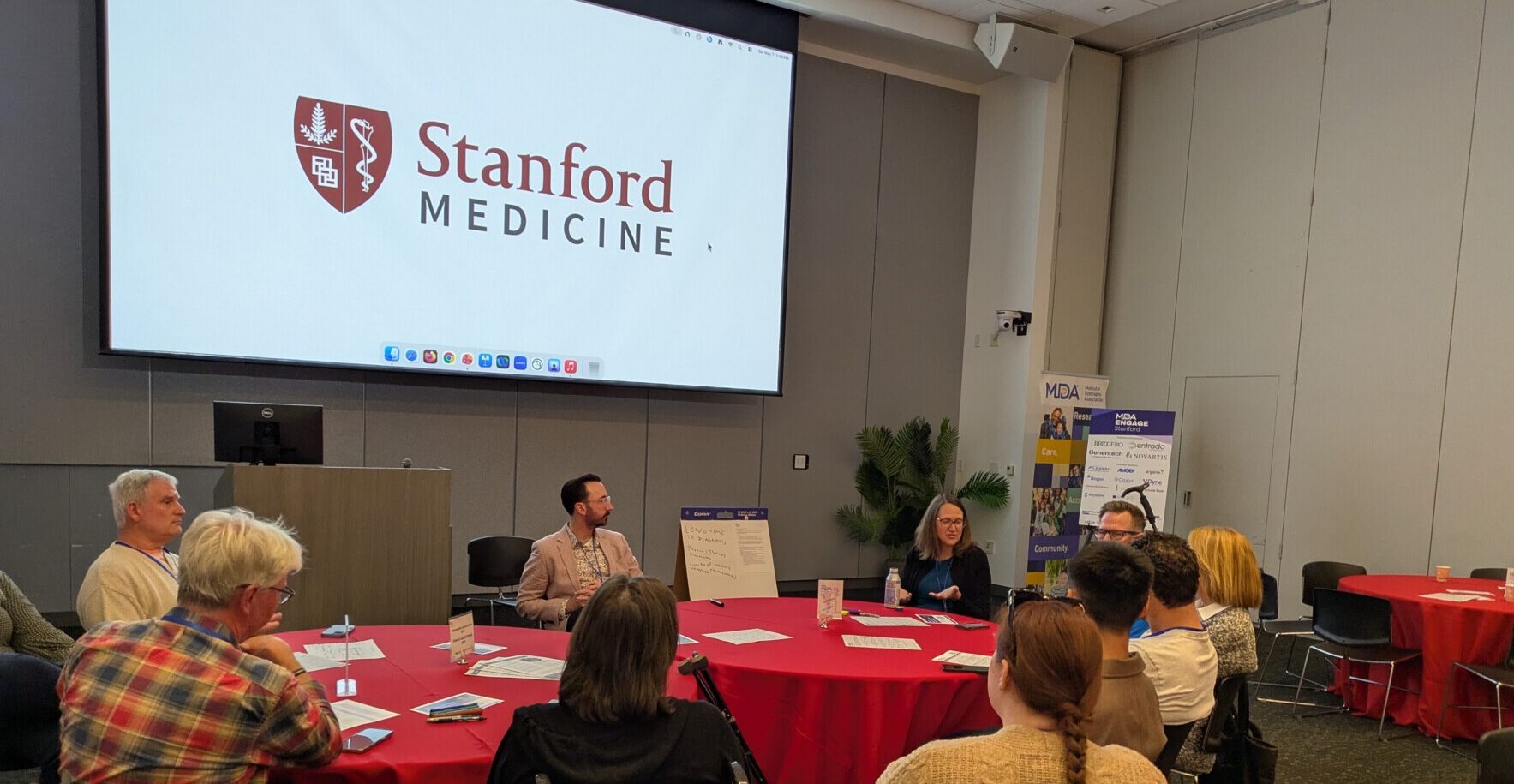
Community members gather for the MDA Engage event in Stanford, California. (Courtesy of MDA)
- The MDA Engage symposium in Stanford, California, featured topics including gene therapies, stem cells, artificial intelligence, and patient self-advocacy.
- Building support networks and a shared sense of community were among the biggest takeaways for attendees.
- Organizers encouraged patients to register with local research centers to help drive future treatment goals.
The recent Muscular Dystrophy Association (MDA) Engage Community Seminar with Stanford Medicine was packed with educational sessions, but some of the most meaningful takeaways for participants were about connection and community.
“That’s what makes MDA Engage Symposium so special,” Marissa Lozano, director of community education at the MDA, said in a written interview with Bionews, the parent company of this site.
“People come for education, but they leave knowing their voice matters,” Lozano said. “And when everyone is part of the conversation … the entire neuromuscular community moves forward together.”
MDA Engage symposiums are community education programs intended to support people living with neuromuscular diseases. The Nov. 7 event was the fourth and final of this year’s MDA Engage events, bringing together more than 200 patients, caregivers, healthcare professionals, industry members, and advocates at Stanford University in California.
‘Unique opportunity’ helps prioritize goals
Lozano said there is “tremendous value” in having many different perspectives in one room.
John W. Day, MD, PhD, the Stanford professor who gave the event’s welcome and closing remarks, echoed that view.
“The MDA Engage Symposium provides a unique opportunity for patients to learn from others,” Day said in a written interview. “It provides a forum in which patients with various conditions can jointly help prioritize goals for clinicians, investigators and pharmaceutical and biotechnology companies as well as the [MDA].”
Day also directs Stanford’s neuromuscular disorders program and serves as an MDA Care Center director and a medical advisor to the MDA.
The MDA Engage agenda included sessions covering topics ranging from new treatments to enhanced diagnostics, mood and behavior, and neuromuscular disease across the lifespan. These conversations were led by more than 20 experts from Stanford Medicine and other California institutions.
“There is a lot happening right now in the neuromuscular space,” Lozano said. “New technologies are changing how research is conducted and how care is delivered, while new treatments are continuing to improve outcomes and, in many cases, change the day-to-day realities of living with a neuromuscular disease.”
Both Day and Lozano said the growing role of artificial intelligence (AI) in neuromuscular care was a popular topic this year.
“People were really interested in understanding what these technologies could mean for patient care, research, and navigating the healthcare system in the future,” Lozano said.
During disease-specific breakout sessions, people with various conditions — including amyotrophic lateral sclerosis, muscular dystrophy, myasthenia gravis, and spinal muscular atrophy — were able to connect and learn from each other and from providers who specialize in their conditions.
Day said a central topic in these discussions was how patients advocate for themselves in research and clinical care, with patients detailing “specific goals… and how they were accomplished via various forms of advocacy.”
The program also highlighted major progress in therapies for neuromuscular diseases, such as gene therapies and stem cells. But neuromuscular conditions are complex, Day pointed out, and many people still have unmet care needs.
Day said progress requires gaining more knowledge about how these diseases evolve before and after disease-modifying treatment, and integrating that knowledge into the research process. This will help scientists identify unmet needs and develop complementary therapies to address them.
Day encourages patients to register with the MDA and local research centers to find ways to participate.
Growing support networks
Community connection was an important takeaway for participants, according to both Day and Lozano.
“What people seemed to value most was the opportunity to be in a room with others who understand what they’re going through,” Lozano said. “The educational sessions are important, but the conversations between sessions, during breaks, and over lunch are often just as meaningful.”
Lozano said one attendee “shared that in the 20 years since his diagnosis, he had never met a person living with the same condition” until he attended an MDA Engage event. There, “he connected with another individual who has since become a close friend, and the two of them met a third person with the same diagnosis” at the Stanford event, she said.
“Watching those support networks grow is incredibly meaningful and a reminder that these events are about community as much as education,” Lozano said.
While this was the last MDA Engage event of the year, the organization is already making plans for 2027. The MDA saw more than 1,000 registrants across four events this year, according to Lozano. “That tells me there’s a real need for opportunities like this,” she said.
“Families are trying to keep up with a lot,” Lozano said. “People want a place where they can hear directly from experts, ask questions, and better understand what all of that means for their own lives.”
A fifth Engage symposium will take place in Denver next year, and the MDA continues to work toward building more programs for the neuromuscular community.
“We’ll keep listening closely to what the community wants and needs, and we’ll continue building programs around those priorities,” Lozano said. “We’re helping people connect, elevating patient voices, and creating opportunities for the community to work together toward better care, greater independence, and a brighter future for people living with neuromuscular disease.”
Note: The Muscular Dystrophy News team is providing coverage of the MDA Engage Symposium. Go here to see the latest stories from the conference.

Leave a comment
Fill in the required fields to post. Your email address will not be published.