
MDA Engage: Seminar connects neuromuscular community in Hershey
Penn State Health event offers families practical tools and treatment updates
Written by |
The Muscular Dystrophy Association (MDA) brought its Engage Community Seminar to Hershey, Pennsylvania, on July 18, uniting individuals with neuromuscular diseases, caregivers, and medical experts for a day of education and connection.
Hosted in collaboration with the Penn State Health Milton S. Hershey Medical Center, the one-day event featured a variety of sessions to educate and empower people living with neuromuscular diseases, including muscular dystrophy, spinal muscular atrophy, amyotrophic lateral sclerosis, myasthenia gravis, and Pompe disease.
“Our hope is that families left with a better understanding of available resources, greater confidence in their care journey, and reassurance that they are part of a broader community working toward improved outcomes and greater independence for individuals living with neuromuscular diseases,” Marissa Lozano, MDA’s director of community education, said in a written interview with Bionews, the parent company of this site.

Connecting the community and local experts
With several events held throughout the year, the Engage program provides opportunities for the neuromuscular disease community, healthcare providers, and industry supporters to connect and learn. The goal is to educate people with neuromuscular diseases, provide guidance, support access to resources and information, and create opportunities for meaningful connections.
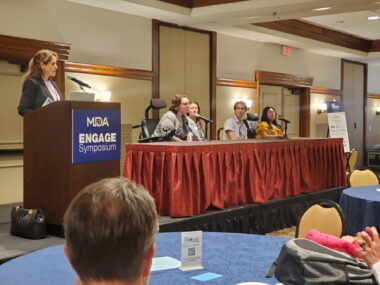
Neuromuscular community members gather for a day of education and connection. (Photos courtesy of MDA)
For these community seminars, the MDA partners with local health organizations. This time, it was the Penn State Medical Center, which operates a certified MDA Care Center.
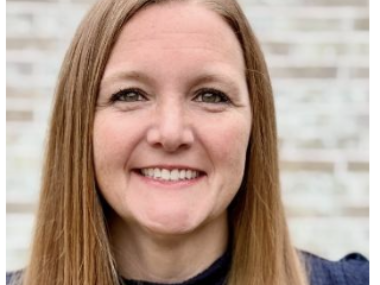
The recent event was led in part by the Care Center’s director, Mansoureh Mamarabadi, MD, an associate professor of neurology at Penn State Health. Mamarabadi gave the opening and closing remarks, and also facilitated two sessions: “Ask the Expert” and “Building Better Treatments Together.”
In a separate interview, Mamarabadi told Bionews that events like this one “provide a unique opportunity to connect with patients and families outside of the traditional clinic environment.”
During clinic appointments, time is limited and often spent reviewing symptoms and making treatment plans, she said. These community seminars “allow for deeper conversations about what patients and families experience in their everyday lives.”
In turn, this helps clinicians better understand a family’s needs and informs the best approach to care and support. “Patients and families are not just recipients of care — they are essential partners,” Mamarabadi said. “The best care comes from listening, learning from each other, and working together.”
Right now is “a very exciting and hopeful time for the neuromuscular community,” according to Mamarabadi, who cited recent progress in the development of disease-modifying therapies and multidisciplinary care models. Ahead, she said, are challenges related to equitable access to care, earlier diagnoses, and addressing needs beyond medical treatment, such as emotional well-being, independence, and caregiver support.
Sessions throughout the community seminar covered many topics relevant to this changing care landscape. There were disease-specific breakout sessions and talks about managing heart and lung complications, physical and occupational therapy, mental health, nutrition, and emerging therapies.
According to Lozano, topics were selected based on community feedback. Speakers were advised to present content that speaks directly to people affected by neuromuscular diseases — rather than focusing solely on medical professionals and scientists.
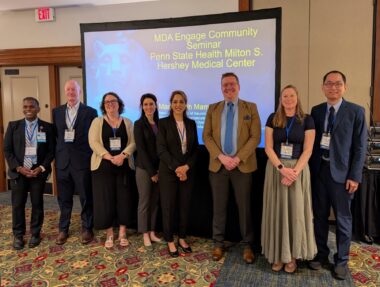
Experts from the local community spoke on a range of topics related to neuromuscular disease.
She said the exercise session was very popular, ranking among the “most requested topics” by community members. Another highly anticipated program, according to both Lozano and Mamarabadi, was the emerging therapies session.
“Attendees find great value … in hearing directly from expert clinicians who are at the forefront of these advancements,” Lozano said. “It brings excitement and hope.”
Still, she said, it’s hard to pinpoint one or two sessions that were most valuable, because every person has different interests and needs.
“One of the reasons we offer a variety of breakout sessions is that attendees come from various backgrounds in terms of their disease, their life stage, their role as a caregiver, and so forth,” she said, adding that these events aim “to meet attendees where they are so that each person leaves with actionable information.”
Lozano also co-chaired a session about MDA’s mission and programs. She highlighted a few of these, including the organization’s resource navigation program, community support groups, peer connection program, and Durable Medical Equipment Grant program.
Patients and families are not just recipients of care — they are essential partners. The best care comes from listening, learning from each other, and working together.
The power of shared experiences
Throughout the day, the patient’s voice was consistently elevated. Individuals had ample opportunity to ask questions and share their experiences, a dynamic Mamarabadi noted as “incredibly meaningful.”
The physician also said one of the most important parts of the event was the opportunities it provided for patients and families to connect with others in the community who understand what it is like to live with a neuromuscular disease and are committed to creating a better future.
Building that sense of community is one reason the MDA believes regional events like this one are so important, Lozano said. Bringing together experts from Penn State Health and other institutions in the area helped toward that goal.
“Knowing that many of the presenters are clinicians in your backyard allows attendees to feel more connected… that sense of community builds and uplifts more than just information alone,” she said. These types of connections enable the community as a whole to “more effectively identify needs, remove barriers to care, and advance solutions that have a meaningful impact on day-to-day life.”
Mamarabadi echoed that sentiment, saying that events like these “highlight the strength of this community and remind us that progress happens when we work together.”
“There is still important work ahead, but the dedication and partnership we see from families and the neuromuscular community give us tremendous hope for the future,” she added.
Upcoming events and registration
Three more Engage events are scheduled for this year, including two symposia in Chicago (Sept. 25-26) and Dallas (Oct. 23-24), and a community seminar with Stanford Medicine in California on Nov. 7. Registration for these programs is free for the neuromuscular disease community.
To learn more about these and other educational programs offered by MDA, individuals can visit the organization’s Community Education webpage.
Note: The Muscular Dystrophy News Today team is providing coverage of the MDA Engage Symposium. Go here to see the latest stories from the conference.

Leave a comment
Fill in the required fields to post. Your email address will not be published.