
With DMD, I’m making plans for tomorrow while preparing for goodbye
Conversations about my absence now sit beside plans for my presence
Written by |

At 31 years old, I am managing two very different conversations about the future. With my girlfriend, Amanda, I discuss what we hope to build together. With my parents and my palliative care doctor, I discuss what should happen if I can no longer speak for myself.
Both conversations concern people I love. Only one feels natural.
Two futures, one life
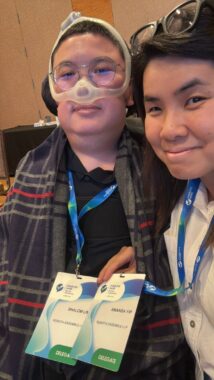
Shalom Lim and Amanda Yip attend the Enabling Mark Business Conference in Singapore in November 2026. (Courtesy of Shalom Lim)
Amanda and I co-founded Rebirth Ensemble, a disability-led creative and consultancy practice. We talk about projects, collaborators, and the pleasures of working together. I want to see our plans take shape. There is still so much I want to experience.
Meanwhile, through Advance Care Planning (ACP), my family and I are discussing my preferences for emergency support and wishes for end-of-life care. We are considering situations where they may need to make tough decisions when I cannot communicate my wishes, and how to navigate them.
What weighs the heaviest on me is knowing that the people I love most may one day have to make those decisions while coping with the possibility of losing me.
I depend on a wheelchair, round-the-clock noninvasive ventilation, and assistance with daily living because of Duchenne muscular dystrophy. Making my wishes known may spare my family the trauma and uncertainty. Yet it also pains me to imagine them needing that information.

When fiction becomes personal
On Nov. 10 and 11, I attended the Enabling Mark Business Conference and Zero Project Asia Pacific Symposium, where discussions about inclusion left me thinking about the future. An episode of chronic fatigue after the second conference reminded me of my vulnerability, without telling me anything new about my prognosis.
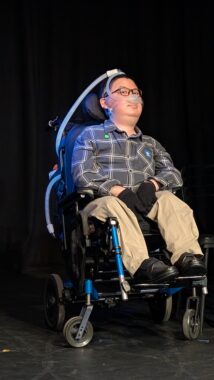
Shalom Lim participates in the post-show dialogue following the first dramatized reading of his play, “The Other Side,” in Singapore on Nov. 22, 2025. (Courtesy of Shalom Lim)
A few days from now marks one year since “The Other Side,” my play, developed with support from ART:DIS, Singapore’s leading arts charity supporting persons with disabilities, was staged as a dramatized reading.
Back then, I explored mortality through fictional characters. Now, questions about my care are no longer confined to a written script. The play’s fictional end-of-life dilemma is different from ACP, but writing it did not make these conversations any easier.
Palliative care is about quality of life, not death. ACP is about making preferences understood, not giving up on tomorrow. Still, knowing the purpose of these discussions does not stop me from wishing they could wait just a little while longer.
Sometimes I move from discussing a collaboration with Amanda to thinking about the decisions my family members may one day face. Nothing dramatic happens between those moments. The calendar fills up, messages arrive, and work continues.
Perhaps that is what troubles me most: how easily conversations about my absence now sit beside plans for my presence. That paradox eats at me from the inside whenever I feel lost, but it does not derail my life. For as long as I am still here, I will trudge on.
Note: Muscular Dystrophy News is strictly a news and information website about the disease. It does not provide medical advice, diagnosis, or treatment. This content is not intended to be a substitute for professional medical advice, diagnosis, or treatment. Always seek the advice of your physician or another qualified health provider with any questions you may have regarding a medical condition. Never disregard professional medical advice or delay in seeking it because of something you have read on this website. The opinions expressed in this column are not those of Muscular Dystrophy News or its parent company, Bionews, and are intended to spark discussion about issues pertaining to muscular dystrophy.


Leave a comment
Fill in the required fields to post. Your email address will not be published.