
Making plans for a future that DMD makes unpredictable
I had my first advance care planning meeting with a palliative care doctor
Written by |

I have an ambitious bucket list for someone who needs help with almost everything physically.
I want to watch Chelsea play at Stamford Bridge, their home stadium in West London, preferably on a Champions League night. I’d love to write my memoir and pursue a master’s degree in economics, systems design, or thanatology, the study of death and grief.
Considering I turned 31 just before Halloween, that last option sounds rather morbid. Then again, I’ve never needed Halloween to remind me of my mortality.
Above all, I want to marry my girlfriend, Amanda, and grow old together. However, living with Duchenne muscular dystrophy (DMD) means I cannot take that future for granted.

Growing older with Duchenne
DMD progressively weakens the muscles, including those responsible for breathing and heart function. I stopped walking at age 6 and now depend on noninvasive ventilation around the clock.
My older brother, Isaac, also had Duchenne. He died from DMD-associated heart failure in December 2019, at age 28. His death changed how I understood growing older. Celebrating my 31st birthday on Oct. 25 reminded me that I’d reached an age he never experienced.
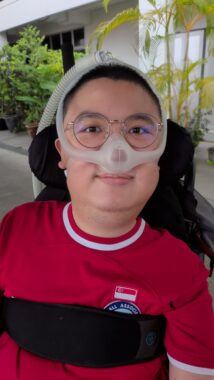
Columnist Shalom Lim, who just turned 31, still has a lot on his bucket list, including writing his memoir of life with DMD. (Courtesy of Shalom Lim)
I’ve received care at Singapore’s National University Hospital since 2005, when I was about 10 years old. Remarkably, I’m still a patient of its pediatrics department at age 31.
On Sept. 23, following my second of two annual infusions for DMD-associated osteoporosis, I attended my first advance care planning (ACP) consultation with my palliative care doctor. My second consultation was on Oct. 28, three days after my birthday.
Discussing future medical decisions during Halloween week wasn’t exactly my idea of a birthday celebration.
ACP helps me communicate my healthcare wishes should I become unable to express them. Having lost Isaac, I want my family to understand what matters to me.
But preparing for death shouldn’t become my full-time occupation. That would be a depressing job description.
Making room for tomorrow
Amanda and I recently celebrated the second anniversary of Rebirth Ensemble, the disability-led creative business we founded in Singapore. I hope to grow this venture into a sustainable business.
Through Shalom Medcare, a medical transport company, I also want to improve awareness of accessible transport and accompanying care services.
Yet my greatest ambitions remain personal: marrying Amanda, spending more birthdays with family, and building a shared future.
Some dreams may never materialize. But I refuse to spend my remaining years worrying about the ones I might not have. ACP helps me prepare for uncertainty. My bucket list reminds me why tomorrow matters.
And after Chelsea’s 2-0 Halloween victory over Manchester United at Stamford Bridge, perhaps I have more reason to believe in happy endings than I thought.
Note: Muscular Dystrophy News is strictly a news and information website about the disease. It does not provide medical advice, diagnosis, or treatment. This content is not intended to be a substitute for professional medical advice, diagnosis, or treatment. Always seek the advice of your physician or another qualified health provider with any questions you may have regarding a medical condition. Never disregard professional medical advice or delay in seeking it because of something you have read on this website. The opinions expressed in this column are not those of Muscular Dystrophy News or its parent company, Bionews, and are intended to spark discussion about issues pertaining to muscular dystrophy.



Leave a comment
Fill in the required fields to post. Your email address will not be published.